
It does not show up as a line item. You will not find it in QuickBooks. But it is real, and it compounds against you every quarter — in the form of higher ad spend, lower close rates, and sales cycles that drag on longer than they should.
The businesses that eliminate this cost do not do it by spending more on marketing. They do it by getting clear — on who they are, who they serve, and what makes them the only logical choice.
That is what I mean when I say clarity compounds.
An inconsistent brand does not fail dramatically. It bleeds slowly — through wasted ad spend, soft closes, and prospects who seemed interested but went quiet.
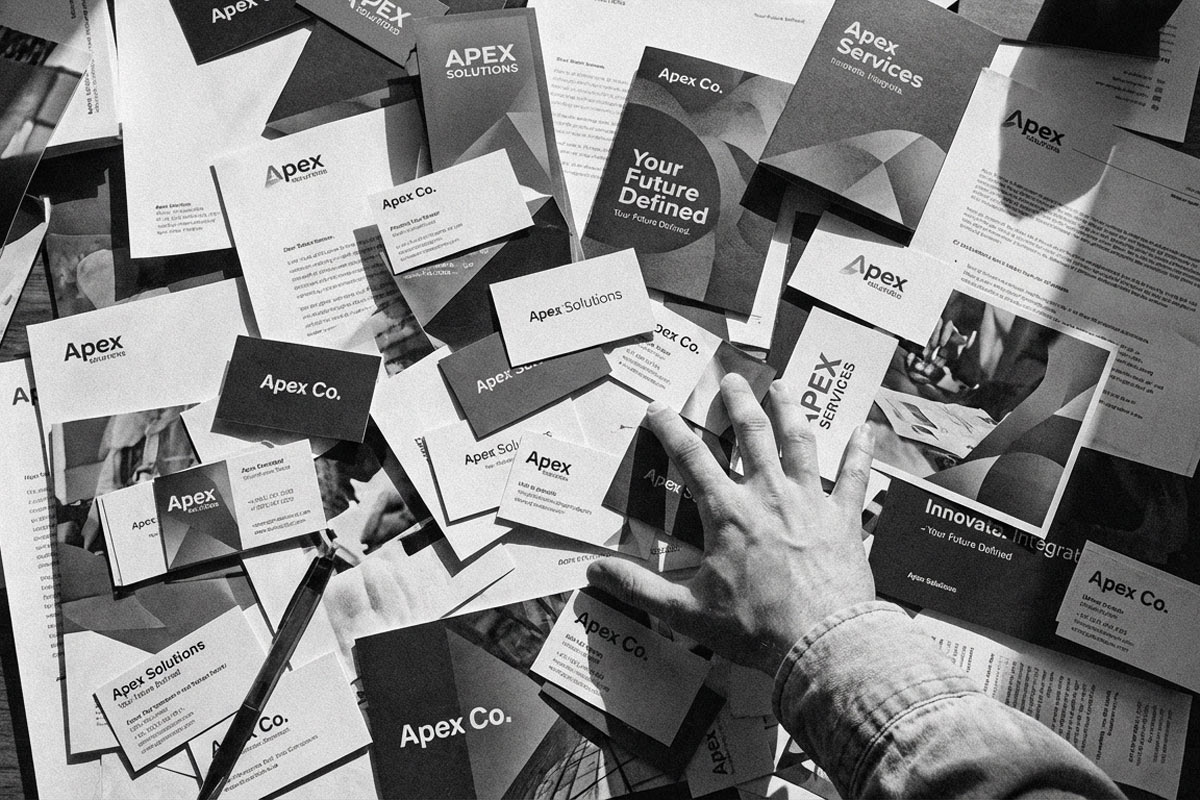
Every brand inconsistency problem shows up in one of three places. Most businesses are dealing with all three simultaneously.
1. Higher ad spend.
When your brand does not have a clear, consistent position, your ads have to work harder to build context that your brand should already be providing. You are paying to explain yourself every single time, instead of paying to remind people of something they already understand. A positioned brand earns reach; a scattered brand has to buy it.
2. Lower conversions.
Inconsistency creates friction at the point of decision. A prospect who sees one message in your ad, a different tone on your website, and a different positioning in your proposal has to do extra work to decide if you are the right fit. That cognitive load produces hesitation. Hesitation produces "I'll think about it." And "I'll think about it" rarely becomes "yes."
3. Longer explanations.
If you are the one explaining your business in every sales call — if you are having to manually build the case for why you exist and what you do — your brand is not doing its job. A strong brand pre-sells. It primes the prospect before the conversation starts, so that by the time you are on a call, they are already oriented. The inconsistent brand forces you to start from zero every time.
Most founders assume brand consistency is about visual standards — making sure your logo is always the right size, your colors are always the right hex codes. And those things matter. But the deeper inconsistency is strategic, not aesthetic.
Strategic inconsistency looks like this: you position yourself differently to different audiences because you are not sure which one is your real ICP. You describe what you do differently depending on who is asking. Your website was written two years ago and no longer reflects what you actually sell or who you actually serve. Your team gives different answers to "what does Abstract Creative do?" depending on who you ask.
This is not a brand standards problem. It is a positioning problem. And no amount of style guides will fix it if the strategic foundation is unclear. More marketing spend amplifies positioning weakness — it does not resolve it.
When a brand is consistent — when the position is clear and every touchpoint expresses that position the same way — something shifts.
Referrals get more specific. Instead of "you should talk to this marketing agency," people say "you need to talk to Abstract Creative — they work with professional services firms that are scaling past $500K and need their brand to catch up to where the business already is." That kind of referral closes faster and filters better than a generic one.
Ads get more efficient. When the brand is positioned clearly, the ad only has to do what ads are supposed to do: generate awareness and drive a click. The brand does the pre-selling.
Sales calls get shorter. Prospects arrive oriented. They know what you do, who you do it for, and why you are different. The call becomes a conversation about fit, not a pitch about existence.
Clarity is not just a brand benefit. It is a business efficiency tool. Every dollar you spend on marketing works harder when the brand underneath it is consistent and clear.
Here are the signs I see most often in growth-stage businesses between $500K and $5M:
If two or more of those are true, you are paying the inconsistency tax. And the longer you wait to fix the underlying positioning, the more expensive it gets.
The good news is that clarity compounds in the other direction too. Once it is installed, it gets easier and more profitable over time — not harder. And once your brand is consistent, your website stops being a liability and starts being your best salesperson.
Foundation Service
The Foundation service is where we establish the positioning, tone of voice, and brand standards that eliminate inconsistency at the source — before it costs you more revenue.
In 30 minutes, we will map exactly where your brand is inconsistent, what it is costing you, and the sequence of moves to fix it.
Client Results
“Efren didn’t just design assets — he built a cohesive brand system that elevated how my business shows up everywhere. We’re regularly asked where our branding came from.”
Sebastian Millan
CEO, TMS — Tools, Materials & Supplies
“He has a rare ability to anticipate client needs proactively, which made the collaboration seamless and efficient. His attention to detail is evident in every deliverable. I highly recommend his services.”
Cathy Torres
CEO, Stamped Passport Society
“This wasn’t just branding — it was business transformation. Website, automation, first campaign — now we feel unstoppable. Our close rate went up immediately.”
Derrick Hendricks
CMO, Grammas

Written by
Founder, Abstract Creative — Brand Transformation Studio, Houston TX
Efren works with professional services firms between $500K and $5M to install the brand infrastructure they need to scale without drift — positioning, architecture, conversion systems, and growth channels built in the right sequence.
Free Download
The complete walkthrough of all four brand pillars — with assessment questions and failure patterns for each. Free, no fluff.
Get the Free BlueprintNot sure where your brand stands? The free assessment identifies your weakest pillar in 5 minutes.
Take the Free Assessment →