
There is a tax on unclear brands. Most organizations are paying it every quarter without knowing it.

It does not appear as a line item. It will not surface in your P&L or your media report.
But it is real, and it compounds — in the form of higher acquisition costs, lower close rates, and sales cycles that drag on longer than the work justifies.
The organizations that eliminate this cost do not do it by spending more on marketing. They do it by getting precise — on who they serve, what they solve, and why they are the only credible answer in their category. That is what clarity compounds means in practice.
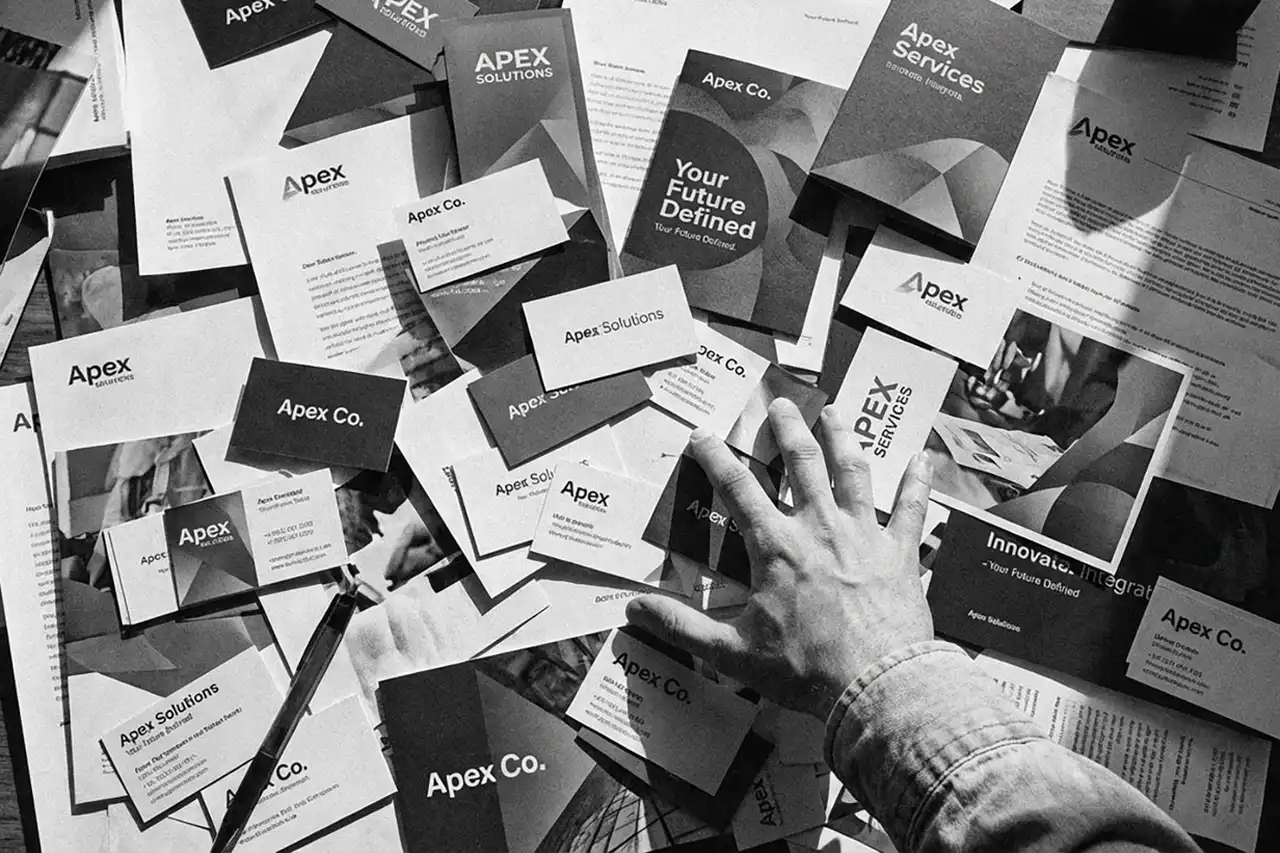
An inconsistent brand does not fail dramatically. It bleeds slowly — through wasted spend, stalled deals, and prospects who went quiet after showing genuine interest.
The Three Places Inconsistency Costs You Revenue
Every brand inconsistency problem shows up in one of three places. Most organizations are absorbing the cost in all three simultaneously.
Higher acquisition costs.
When your brand lacks a clear, consistent position, your paid channels have to work harder to build context that your brand should already be providing. You are paying to explain yourself on every impression — instead of paying to reinforce something the market already understands. A precisely positioned brand earns reach. A scattered one has to buy it, repeatedly, at full price.
Lower conversion rates.
Inconsistency creates friction at the point of decision. A senior buyer who encounters one message in your advertising, a different tone on your website, and a different framing in your proposal has to reconcile the gaps before they can decide. That cognitive load produces hesitation. Hesitation produces "we need to revisit this internally." And that conversation rarely produces a signature.
Longer, more expensive sales cycles.
If your team is spending the first twenty minutes of every executive conversation establishing what you do and why it matters — your brand is not doing its job. A strong brand pre-sells. It orients the buyer before the meeting starts, so the conversation begins at fit, not at awareness. The inconsistent brand forces every person on your team to rebuild the case from scratch, every time.
Why This Is Not a Visual Standards Problem
The common assumption is that brand consistency is a design discipline — logo usage, color codes, typography rules. Those things matter. But they are downstream of a more fundamental problem.
Strategic inconsistency looks like this: your positioning shifts depending on the audience, because you have not resolved which segment is your real priority. Your senior leaders describe the firm differently depending on who is asking. Your website reflects a version of the business that existed two years ago. Your sales team and your marketing team are telling different stories, and neither story matches what your best clients would say about you.
No brand standards document fixes this. Style guides govern expression — they do not generate strategic clarity. The root cause is a positioning problem. And the consequence of not resolving it is that every dollar invested in marketing amplifies the confusion rather than compounding the authority.
More spend does not fix weak positioning. It scales it.
What Consistency Actually Produces at the Organizational Level
When positioning is locked and every touchpoint expresses it with discipline, the business operates differently.
Referrals become more precise. Instead of "you should talk to this agency," you get "you need to talk to Abstract Creative — they work specifically with professional services firms navigating this stage of growth, and they build the infrastructure that makes the brand work without you in every conversation." That referral arrives pre-qualified and closes faster.
Paid channels become more efficient. When the brand is doing the pre-selling, your ads only have to do what ads are designed to do: generate awareness and drive action. The brand handles the positioning work. The spend handles the reach.
Sales conversations get shorter and more decisive. Buyers arrive oriented. They already understand who you serve, what you solve, and why you specifically. The call becomes a conversation about fit — not a pitch about existence.
Clarity is not a brand benefit. It is a business efficiency multiplier. Every dollar you invest in marketing works harder when the brand underneath it is consistent, precise, and strategically sound.
The Diagnostic: Signs Your Organization Is Paying This Tax
These are the patterns that appear most consistently in organizations operating with brand inconsistency:
- Inbound conversion rates are lower than the quality of the work justifies.
- Sales calls are spending significant time on explanation rather than evaluation.
- Paid channels generate traffic but not qualified pipeline.
- Referrals are strong in volume but inconsistent in fit — producing a wide range of client quality.
- The brand has been updated in some form within the last two years, but still does not feel like an accurate representation of where the business actually is.
If two or more of those are true, the inconsistency tax is already in your numbers. And the longer the underlying positioning remains unresolved, the more expensive the correction becomes — because the misalignment compounds into hiring decisions, team communication, and market perception.
The inverse is also true. Once clarity is installed, it compounds in the other direction. Acquisition costs come down. Sales cycles shorten. The market's understanding of what you do and why it matters becomes self-reinforcing.
Where to Start
The starting point is not a rebrand. It is not a new campaign. It is an honest evaluation of whether your current positioning — the strategic foundation underneath everything else — accurately reflects the business you are running today and the clients you are built to serve.
If it does not, that is the first problem to solve. Everything built after it is faster, more efficient, and significantly less expensive to maintain. At Abstract Creative, we call the work that follows the ICON Method — a sequenced framework for locking positioning, building the architecture, and turning the brand into something that works without you in every room.