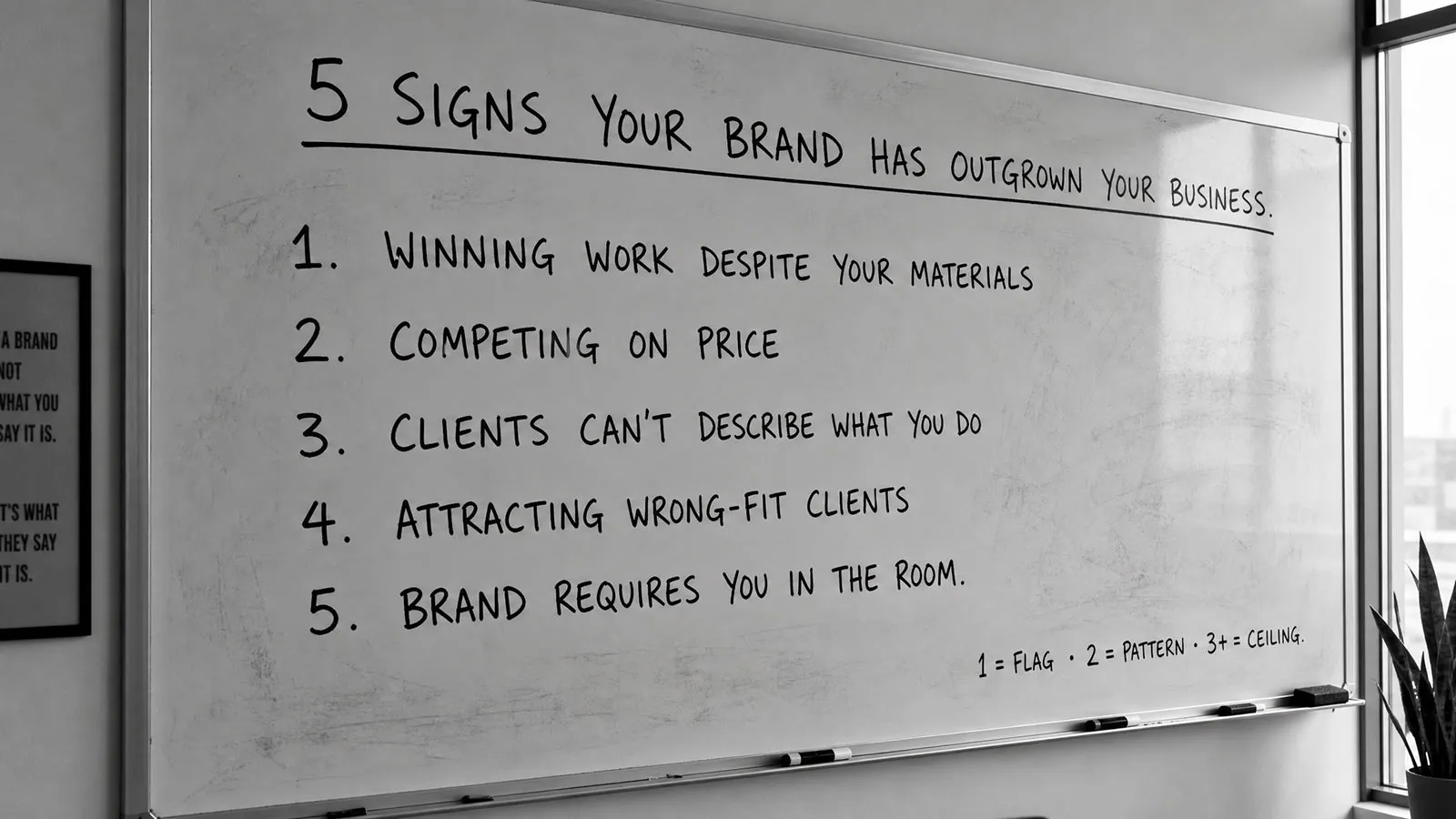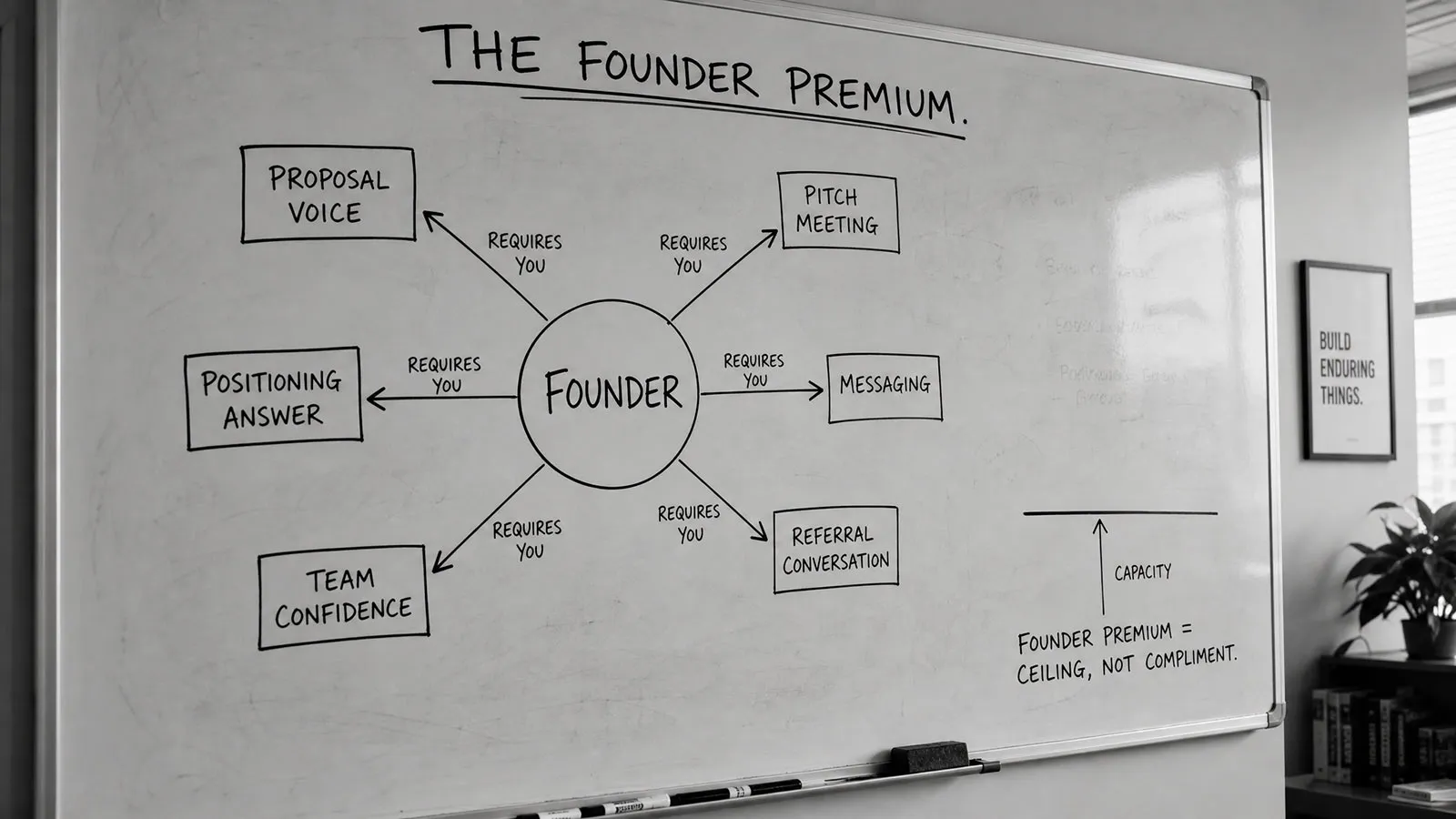
What a Real Brand Audit Reveals — and What to Do When You Find It
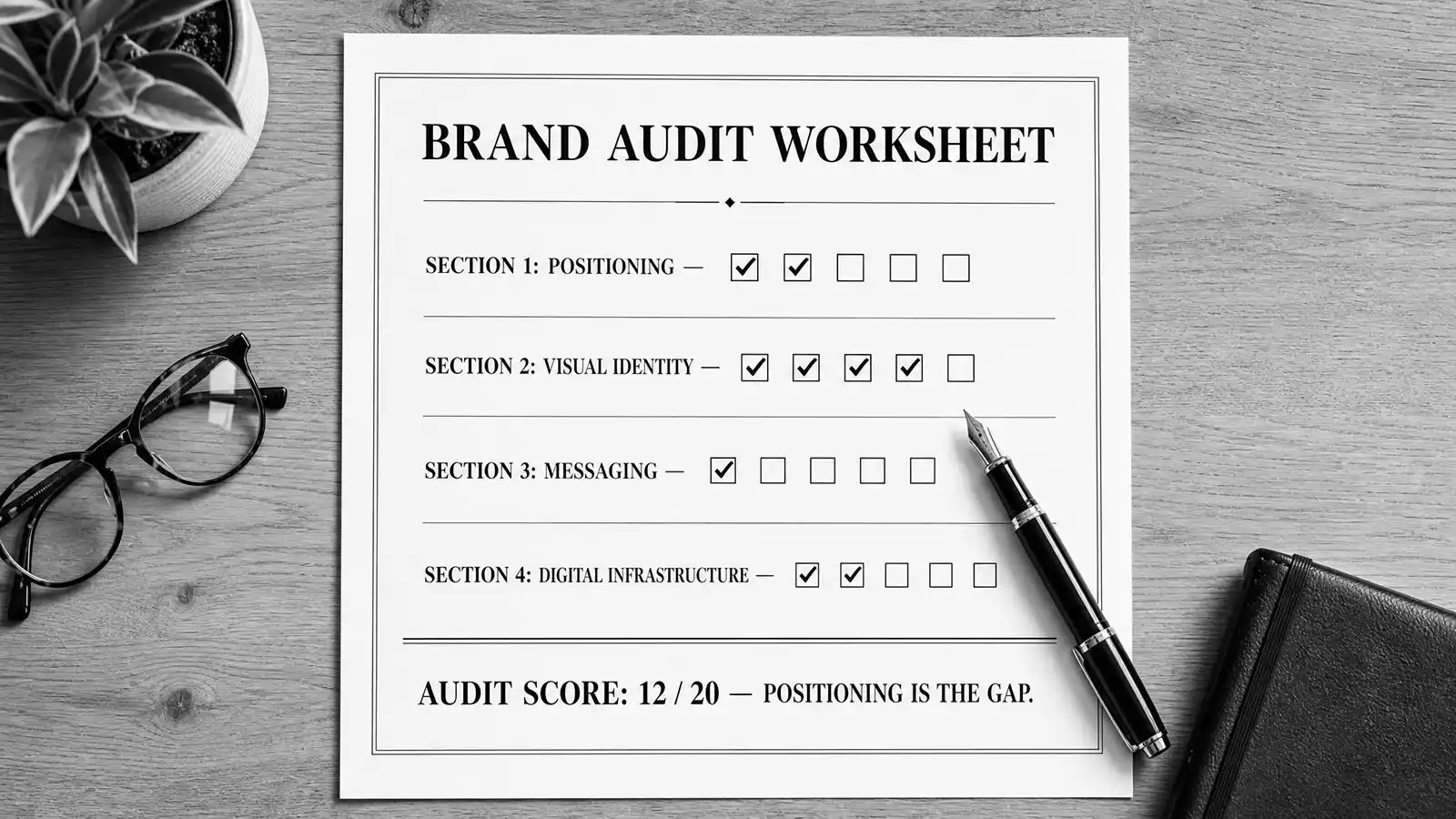
Most founders who request a brand audit are hoping it will tell them something specific: that their logo needs updating, or that their website needs a redesign, or that their colors are wrong. Something they can point to and fix with a defined scope and a defined budget.
What a real brand audit usually reveals is something more uncomfortable: the firm communicates differently depending on who is doing the communicating, the touchpoints do not point in the same direction, and the core message — the specific articulation of who the firm serves and how it differs from alternatives — is either missing or buried.
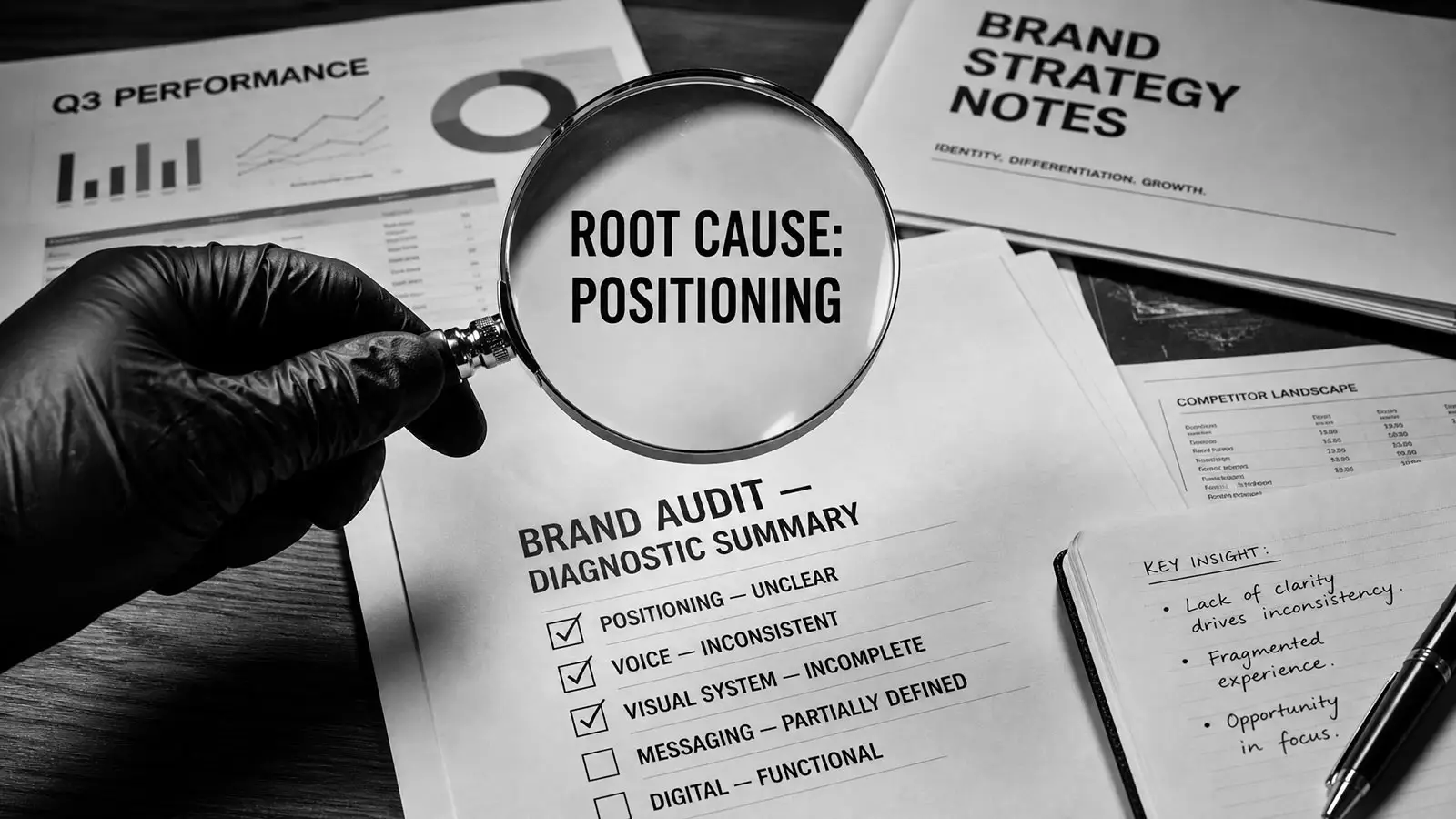
That is not a logo problem. It is a positioning and infrastructure problem. And the audit's job is to surface it clearly enough that the right work can start.
What a Brand Audit Actually Is
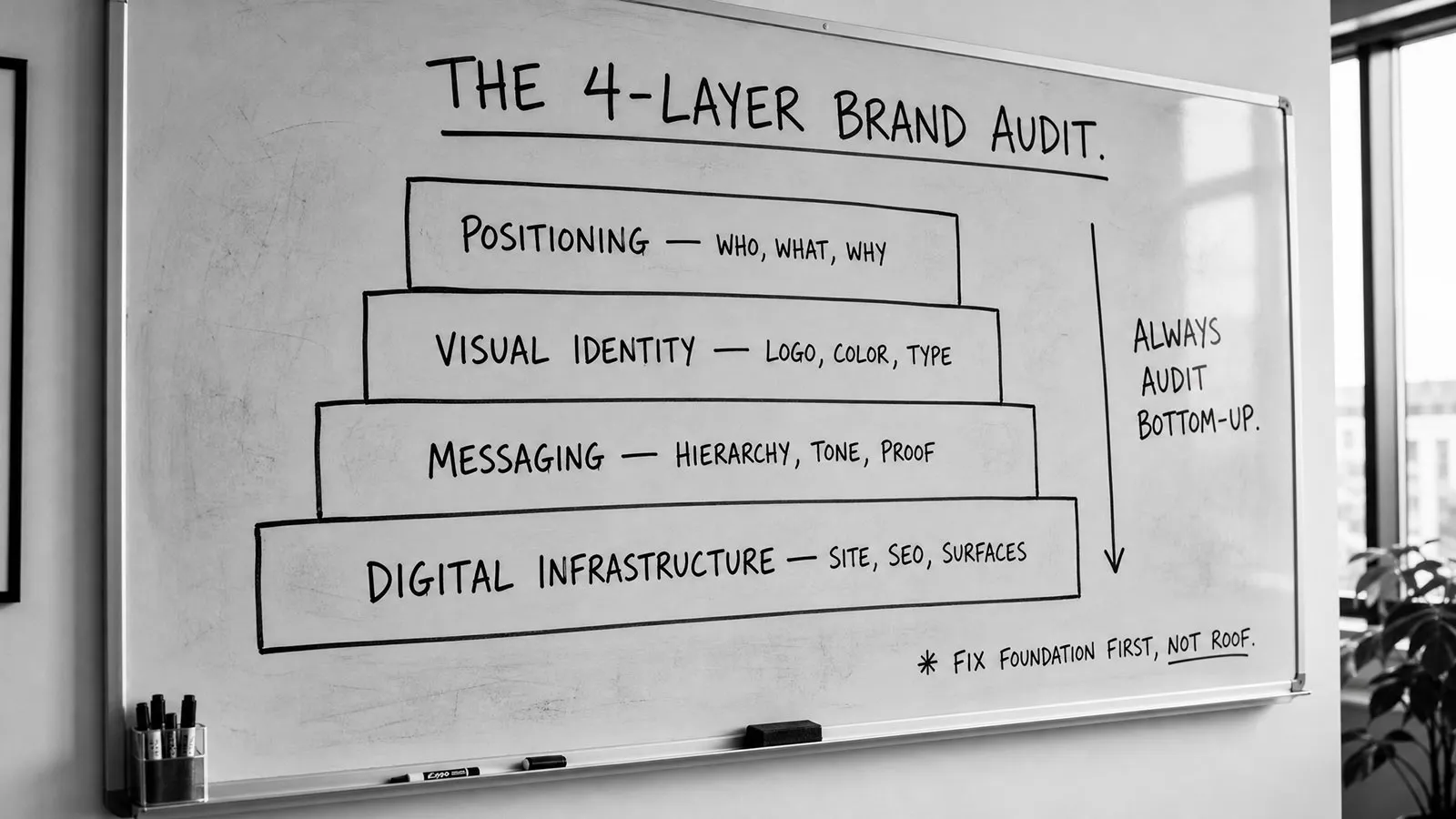
A brand audit is a structured assessment of how consistently your firm communicates its positioning across every touchpoint where a prospect or client encounters it. That includes the obvious surfaces — website, LinkedIn, proposals, pitch decks — but also the less obvious ones: how team members describe the firm in conversation, how the sales process is structured, how onboarding materials frame the relationship, and how the firm shows up in third-party contexts like referral conversations and review platforms.
The audit measures consistency and coherence. Consistency asks: does the firm say the same thing everywhere? Coherence asks: does what the firm says accurately reflect what it actually delivers, and does it resonate with the clients it is trying to attract?
Most firms fail on both dimensions — not because of neglect, but because brand infrastructure was never built deliberately. It accumulated over time, updated piecemeal, and never pressure-tested against a clear strategy.
"A brand audit is not a critique of your logo. It is a diagnostic of how consistently your firm communicates its value — and where the gaps are costing you."
The Five Areas a Brand Audit Examines
Positioning foundation. Is there a clear, specific positioning statement that articulates who the firm serves, what problem it solves, and how it differs from alternatives? If the founder cannot state it in one sentence, the rest of the audit is almost guaranteed to reveal inconsistency.
Digital presence. Website, LinkedIn company page, team member profiles, Google Business Profile. What does each say? Do they all point in the same direction? Is the language consistent? Is the core message visible above the fold on the homepage, or buried three pages in?
Sales and proposal materials. How does the firm present itself in the sales process? Does the proposal reinforce the positioning, or does it look like a different company assembled it? Does the pitch deck lead with the client's problem or the firm's history?
Client-facing communications. Onboarding materials, project deliverables, follow-up communications. Do these reinforce the brand's voice and positioning, or do they drift into generic professional language that anyone could use?
Team alignment. How do team members describe the firm in conversation? Is there a shared language, or does the description change depending on who you ask? This gap is almost always larger than founders expect.
What Typically Surfaces
The most common finding in a brand audit of a $1M–$3M Houston professional services firm is not a visual problem. It is a positioning gap: the firm has never made an explicit decision about what it will and will not be, so the brand has tried to be everything to everyone and landed as nothing to anyone in particular.
The second most common finding is drift — the website says one thing, the proposals say something slightly different, and conversations with team members produce a third version. None of them are wrong exactly, but none of them are consistent, and that inconsistency creates friction in every part of the sales process.
The value of the audit is not the document it produces. It is the clarity it creates — a precise map of where the brand is doing its job and where it is undermining the firm. That clarity makes the remediation work faster, cheaper, and more likely to produce lasting results. You are not guessing at what to fix. You know exactly where the gaps are and what is driving them.