
The Competitor You Don't Know You Have
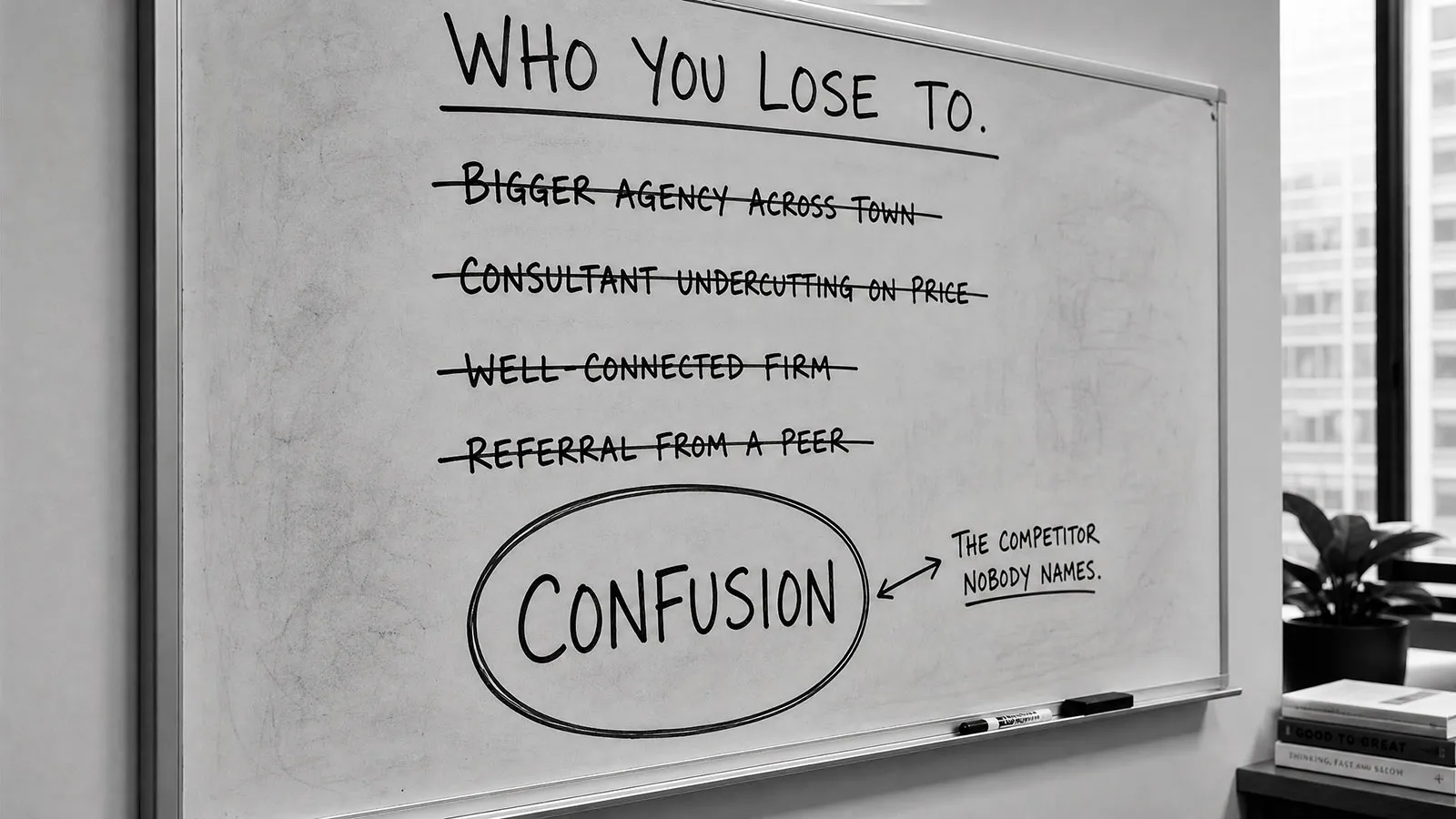
Most founders in Houston think they lose deals to other firms. They track the usual suspects — the bigger agency across town, the consultant who undercuts on price, the well-connected firm that seems to win everything.
But there is a competitor nobody names in the debrief. One that costs professional services firms in Houston, Sugar Land, and The Woodlands more revenue than any rival ever could.
That competitor is confusion. Not confusion from the prospect's side — confusion on yours. The inability to communicate, clearly and consistently, what your firm does differently and why that difference matters to the exact client you want to serve.
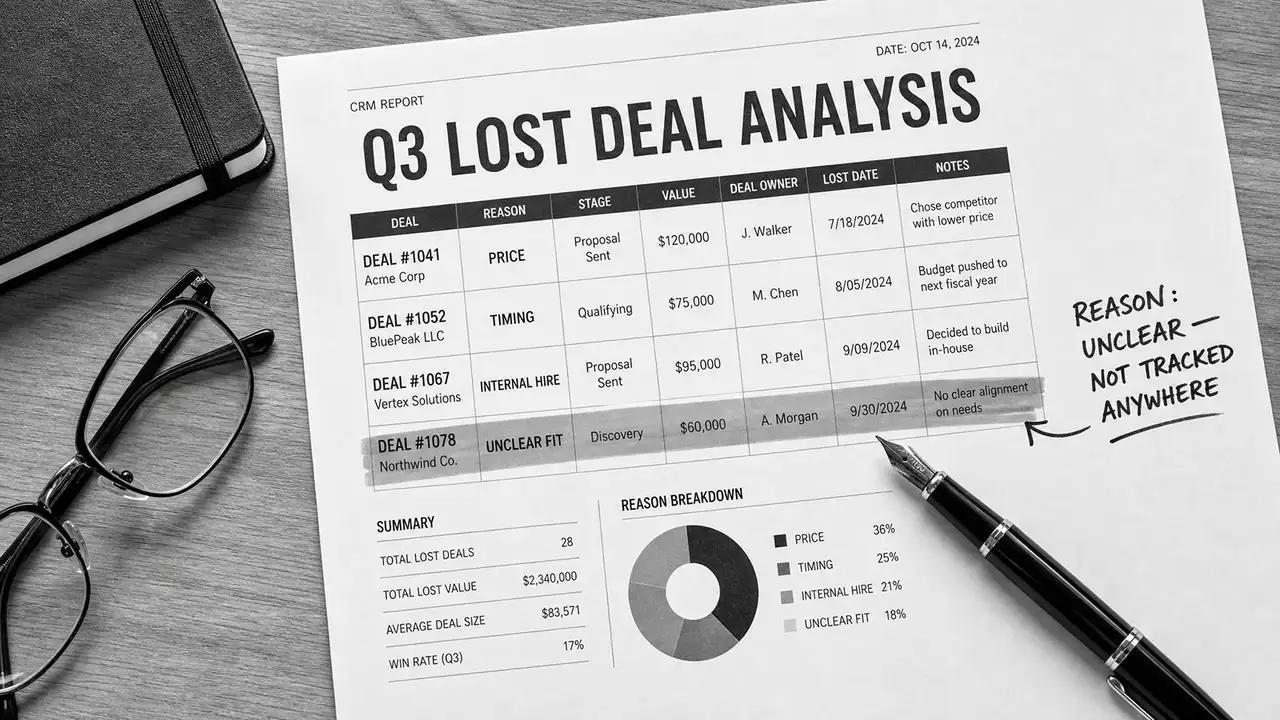
"You are not losing deals to competitors. You are losing them to your own unclear brand — and you will never see that in a CRM report."
The Deal Lost Before It Started
Here is how it actually plays out. A CFO in Katy refers you to a peer in Pearland. The peer searches your name before the intro call. They land on your website. The headline is something like: "Helping Businesses Grow." The services page lists eight things you do. The About page is a history of the company, not a reason to hire you.
They join the call already uncertain. You spend the first fifteen minutes explaining what you do instead of building on why they should work with you. You are starting three steps behind before you have said anything wrong.
That is not a sales problem. It is a positioning problem.

Why Clarity Is a Revenue Issue
Positioning is not branding for branding's sake. It is the infrastructure that determines how fast you move from first contact to signed engagement. Firms in Houston's professional services market — law, consulting, engineering, financial advisory — operate in tight relationship networks where reputation travels fast and first impressions are permanent.
When your positioning is specific, your name arrives with context. When it is vague, your name arrives as a question mark. Prospects fill that question mark with their own assumptions — usually the lowest-risk, most generic interpretation of what you might do.
And then they hire someone who was easier to understand.
- Longer sales cycles — more time spent explaining, less time selling.
- Higher proposal volume for the same revenue — because fewer convert.
- Referrals that arrive unclear — because your clients don't have the language to describe you precisely.
Firms with sharp positioning do not close more deals by working harder. They close more deals by making the decision easier for the right prospect.
The Specificity Test
Take the homepage headline from your current website. Read it out loud. Now ask: could any other firm in your category claim the exact same thing?
If the answer is yes — and for most professional services firms in greater Houston, the answer is yes — you do not have a positioning statement. You have a placeholder. And a placeholder will not win the deal you are not in the room for.
Sharp positioning answers three questions in a sentence or two: who you serve specifically, what you do differently, and why that difference matters to them. Every word on your site, your LinkedIn, your proposal cover, should be derived from the answer to those three questions.
If it is not, you are letting the prospect write the story. And they will write the wrong one.