
It is not $50 million. It is not even $10 million. It is the range most growth-stage founders are in right now: $500,000 to $5 million in annual revenue.
And the breakdown is not random. It follows a pattern I have seen hundreds of times across 25 years of brand work.
Your brand was built for a version of your business that no longer exists.

At the early stages, your brand is you. Your reputation opens doors. Your relationships close deals. Your taste drives every decision. This is not a flaw — it is actually a feature of the founder-led growth phase.
But then something shifts. You hire your first team members. You start pursuing clients who do not know you personally. You try to delegate. And suddenly the brand that worked beautifully when you were running everything starts to fracture.
Your team improvises your messaging because there is no documented standard. New hires cannot represent the company the way you would because no one has ever written down what that looks like. Your marketing spend stops converting because the positioning was built for a founder in the room, not a brand working independently.
The instinct at this stage is to hire a marketing agency. I understand why. You have budget, you have growth goals, and you want someone to execute.
But here is what most agencies will not tell you: they cannot fix a foundation that was never built. No amount of paid traffic, content, or social media will convert a brand that lacks clear positioning, documented voice, and a consistent message architecture.
The agencies are not the problem. The sequence is. More marketing will not fix weak positioning — it will amplify it.

Brand infrastructure is not a logo refresh or a new color palette. It is the operating system your business runs on when you are not in every conversation.
It includes:
When these four elements are built and connected, your brand does not depend on you being in the room. It works for you 24 hours a day — in your website, your proposals, your team's emails, your social presence.
The businesses I have watched successfully navigate the $500K to $5M crossing all share one thing. They made the decision to stop building on instinct and start building on infrastructure.
They locked their positioning before they poured budget into marketing. They documented their voice before they hired a content team. They built a visual system before they redesigned their website.
The sequence is not exciting. It is not the thing anyone wants to talk about at a founder dinner. But it is the difference between brands that scale and brands that stall.
You do not need a louder brand. You need a clearer one.
If you are in that range and you feel the friction — the inconsistency, the team improvising, the marketing that is not converting — the first step is an honest audit of your foundation.
Not your visuals. Your positioning. Your message architecture. Your brand's ability to operate without you. If you suspect the problem runs deeper than marketing — that you have become the bottleneck in your own business — that is almost always the same root cause.
That audit is exactly what we do in a Clarity Session at Abstract Creative. In 60 minutes, we map where your brand is working, where it is breaking, and what needs to be built next.
Client Results
“Efren didn’t just design assets — he built a cohesive brand system that elevated how my business shows up everywhere. We’re regularly asked where our branding came from.”
Sebastian Millan
CEO, TMS — Tools, Materials & Supplies
“He has a rare ability to anticipate client needs proactively, which made the collaboration seamless and efficient. His attention to detail is evident in every deliverable. I highly recommend his services.”
Cathy Torres
CEO, Stamped Passport Society
“This wasn’t just branding — it was business transformation. Website, automation, first campaign — now we feel unstoppable. Our close rate went up immediately.”
Derrick Hendricks
CMO, Grammas
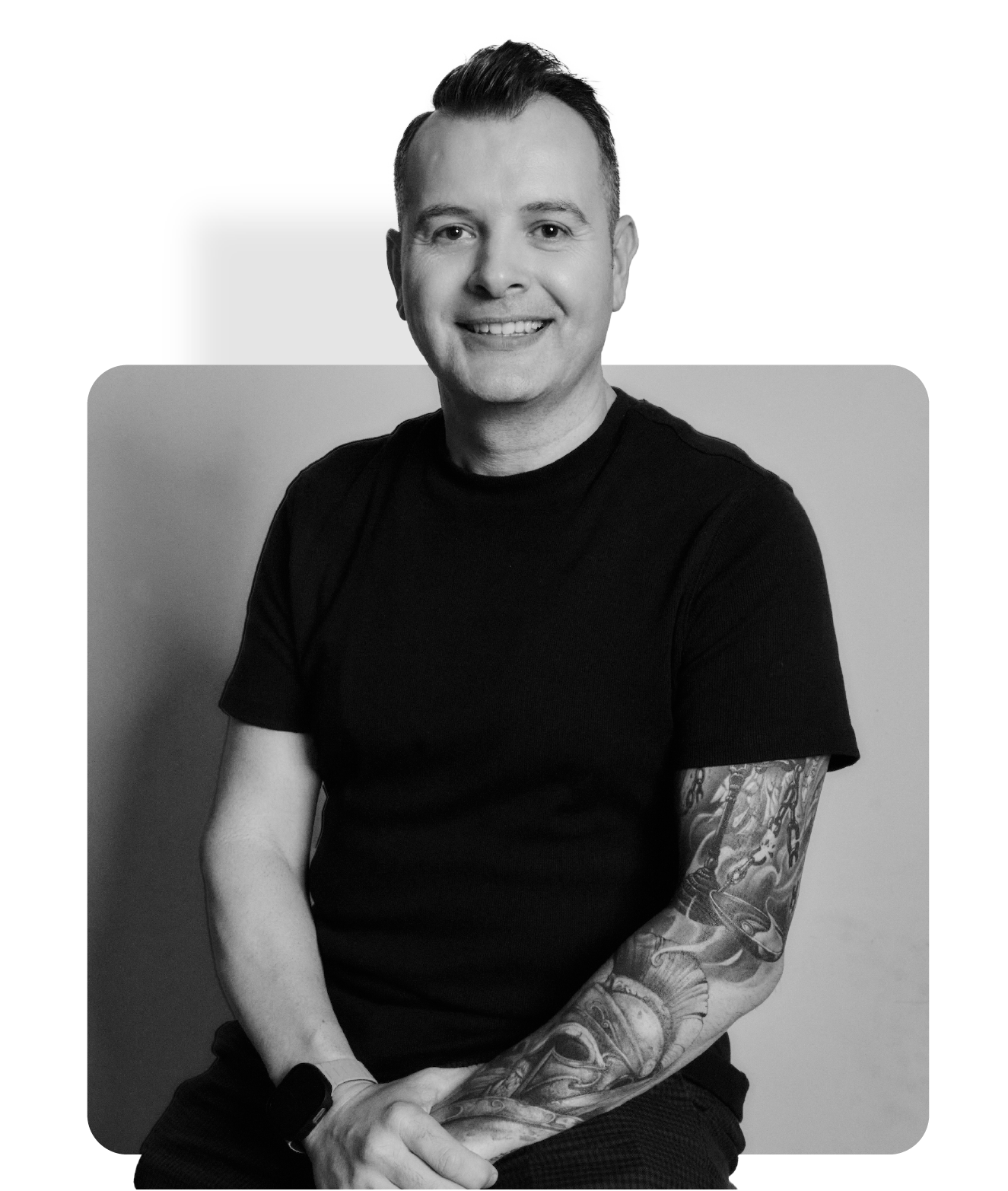
Written by
Founder, Abstract Creative — Brand Transformation Studio, Houston TX
Efren works with professional services firms between $500K and $5M to install the brand infrastructure they need to scale without drift — positioning, architecture, conversion systems, and growth channels built in the right sequence.
Free Download
The complete walkthrough of all four brand pillars — with assessment questions and failure patterns for each. Free, no fluff.
Get the Free BlueprintFoundation + Identity
The Foundation and Identity services build the positioning, standards, and visual system that let your brand scale with the business — not behind it.
Book a 30 minute conversation. We'll map what's working, what's breaking, and what to build next — no pitch, no pressure.
Not sure where your brand stands? The free assessment identifies your weakest pillar in 5 minutes.
Take the Free Assessment →