Your Website Is Working Against You and You Do Not Know It Yet

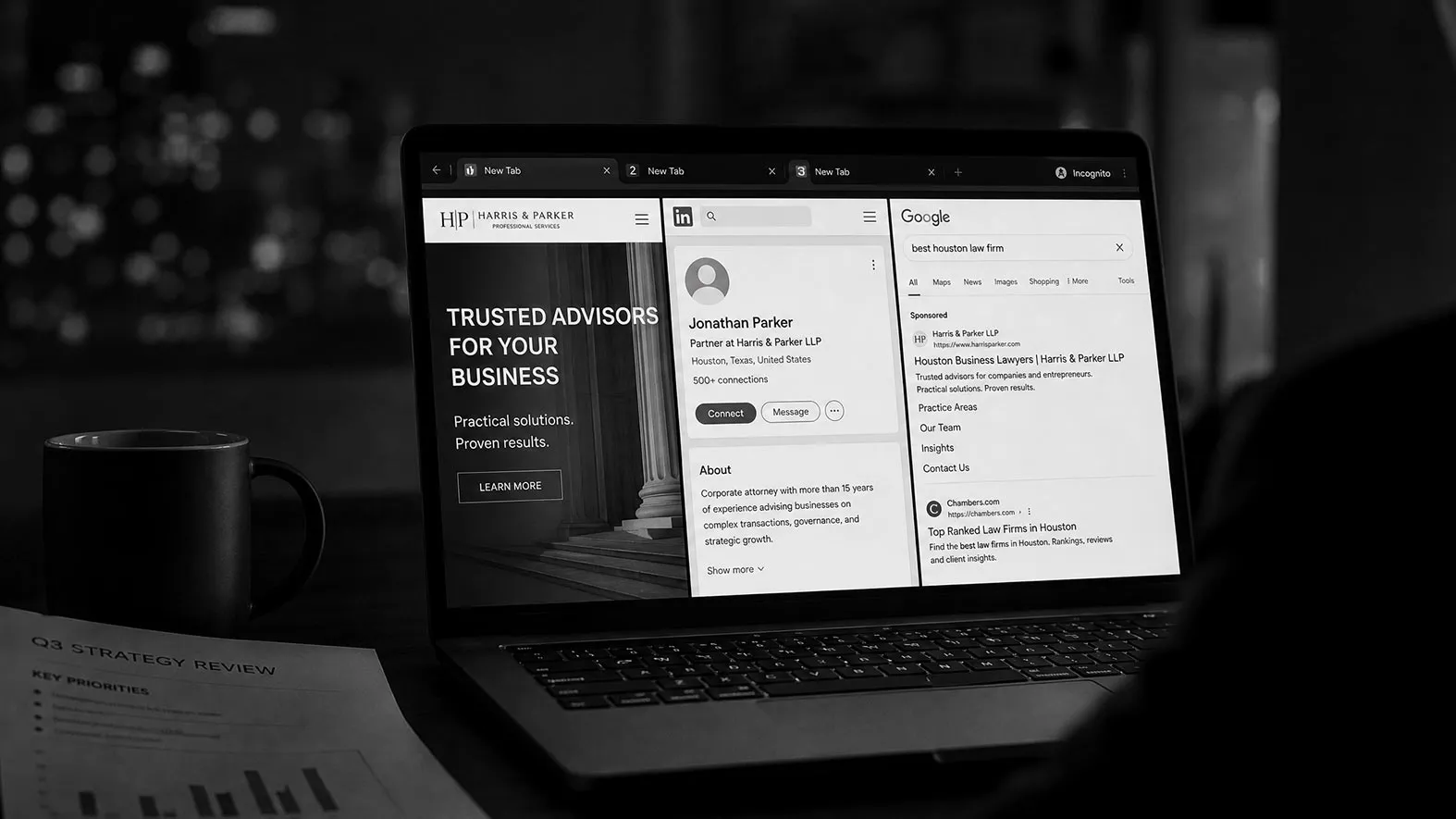
A prospect finds your firm. Maybe through a referral, maybe a LinkedIn post, maybe a search. They land on your website. They have about eight seconds before they decide whether to keep reading or close the tab.
In those eight seconds, they are asking three questions: Do you work with firms like mine? Do you solve the specific problem I have right now? And does this firm look like it can actually deliver?
Most Houston professional services websites fail all three — not because they look bad, but because they answer the wrong questions. They lead with credentials, capabilities, and company history. The visitor is asking about their own situation and you are talking about yourself.
The Silent Disqualification
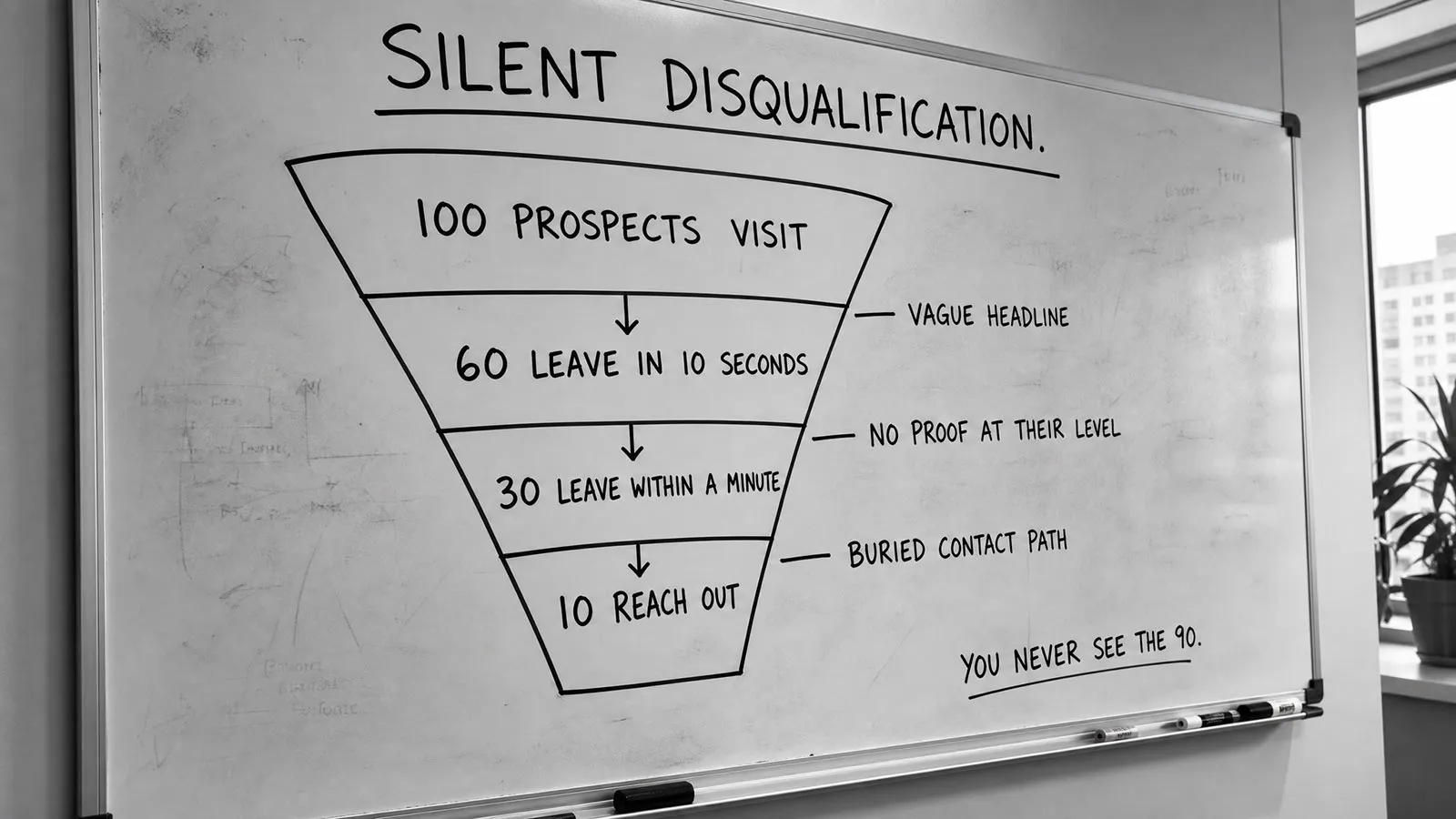
You will never know this happened. The prospect who left your site in six seconds did not send you an email explaining why. They did not fill out a feedback form. They simply went to the next option on the list — which, for most professional services categories in Houston, is someone who does essentially what you do.
This is what I call a silent disqualification. The lead was never counted as lost because it was never counted at all. Your CRM shows only the conversations that started — not the ten times more prospects who looked and left before raising their hand.
The firms that solve this stop thinking about their website as a place to put information and start thinking about it as a conversation. A well-structured professional services site answers the visitor's question before they think to ask it: "Yes, we work with your type of firm. Here is the exact problem we solve. Here is the evidence that we solve it well."
"A website that looks good and communicates nothing is not an asset. It is a professionally designed dead end."

The Right Question to Ask Your Website
Most firms evaluate their website by asking: "Does this represent us well?" That is the wrong question. The right question is: "Does this make a qualified prospect more likely to reach out, and does it make an unqualified prospect more likely to self-select out?"
A website that converts for professional services is not a brochure. It is a filter and a magnet simultaneously. It should attract exactly the clients you want to work with and communicate clearly enough that the wrong fits disqualify themselves before they ever book a call.
To do that, the positioning has to be tight. You cannot have a vague, all-encompassing value proposition and also expect the right clients to recognize themselves in it. Specificity is the mechanism — and most firms are afraid of it because they think narrowing their message means losing leads. In practice, it means losing the wrong leads and converting the right ones at a higher rate.
What a High-Converting Professional Services Site Actually Does
The best professional services websites in Houston share a few characteristics that have nothing to do with design trends. They lead with the client's problem, not the firm's history. They use language the target client uses internally when they are thinking about the problem — not industry jargon or internal terminology. They provide evidence that is specific and verifiable, not general claims anyone could make.
Most importantly, they make the next step obvious and low-risk. The prospect who is 80% convinced does not want to schedule a full discovery call. They want a twenty-minute conversation with no obligation. The site that offers that gets the meeting. The site that offers "contact us" to start a relationship gets the tab closed.
If your site is not generating qualified inquiries consistently — meaning the prospects who reach out are already a good fit before the first call — the positioning and structure are the issue. The design is secondary. A beautifully designed site with the wrong message converts worse than an ugly site with the right one. Fix the message first.