
The decision to call you — or not — is already made before a single conversation takes place.
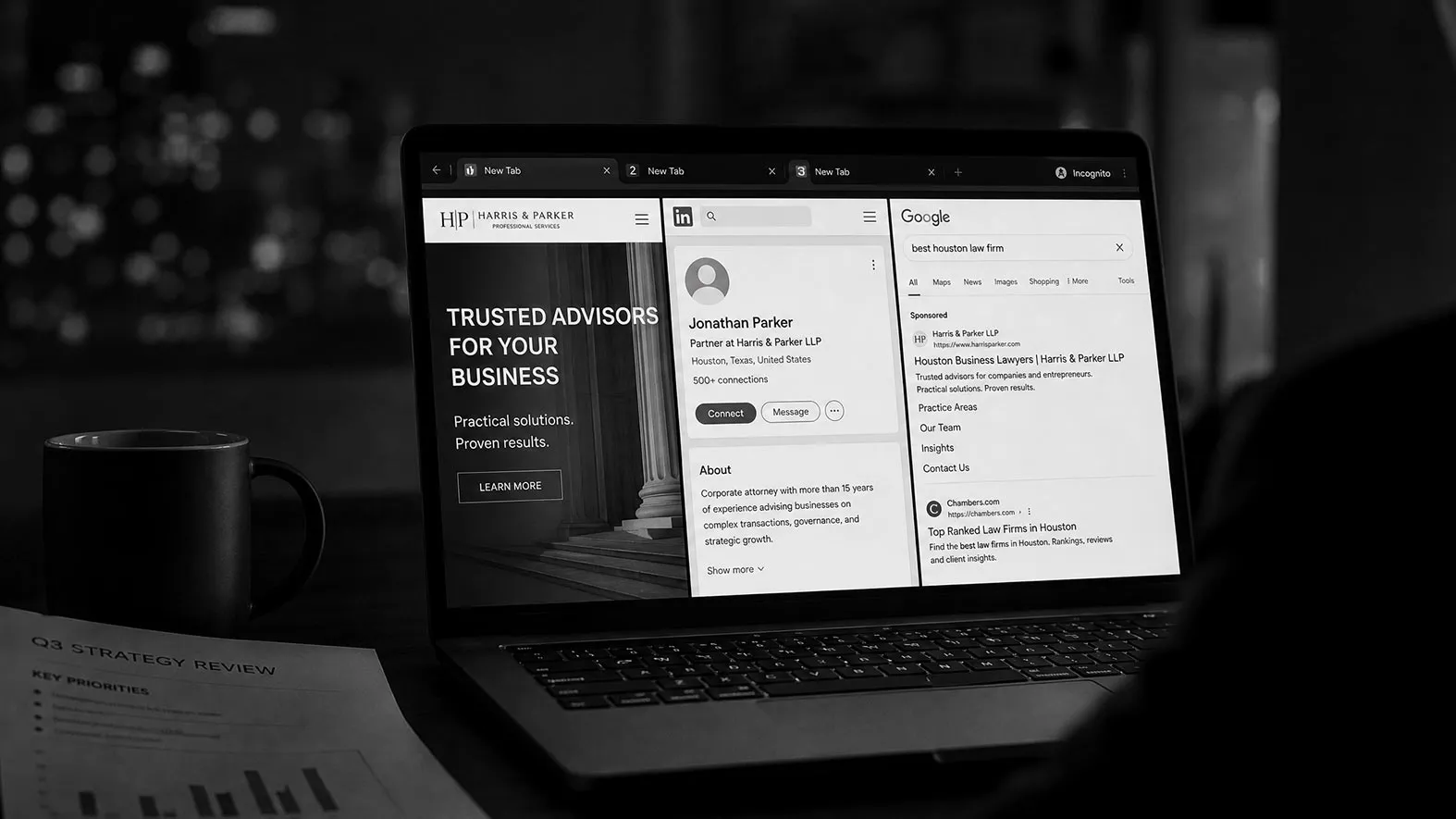
There is a moment in every professional services deal that most founders never see. It happens before the introduction, before the referral call, before any conversation at all. It happens on a screen, usually late in a workday, when a decision-maker types your firm's name into a search bar to decide whether you are worth their time.
Most Houston professional services firms lose that moment without ever knowing it happened.
The Invisible Evaluation
Buyers in Houston's professional services market do not evaluate firms the way they did fifteen years ago. Word of mouth still opens doors — but what you find when you walk through that door is now a digital evaluation, not a handshake. Before a prospect emails you, before they book a call, they have already read your website, checked your LinkedIn, scanned your case studies, and formed an opinion about whether your firm matches their problem.
That evaluation takes less than three minutes. And it happens entirely without you in the room.
The question your prospect is answering is not "are they credible?" It is "do they feel like the right fit for a firm at my level?" Those are different questions — and most websites only answer the first one.
Where Houston Firms Are Losing the Decision
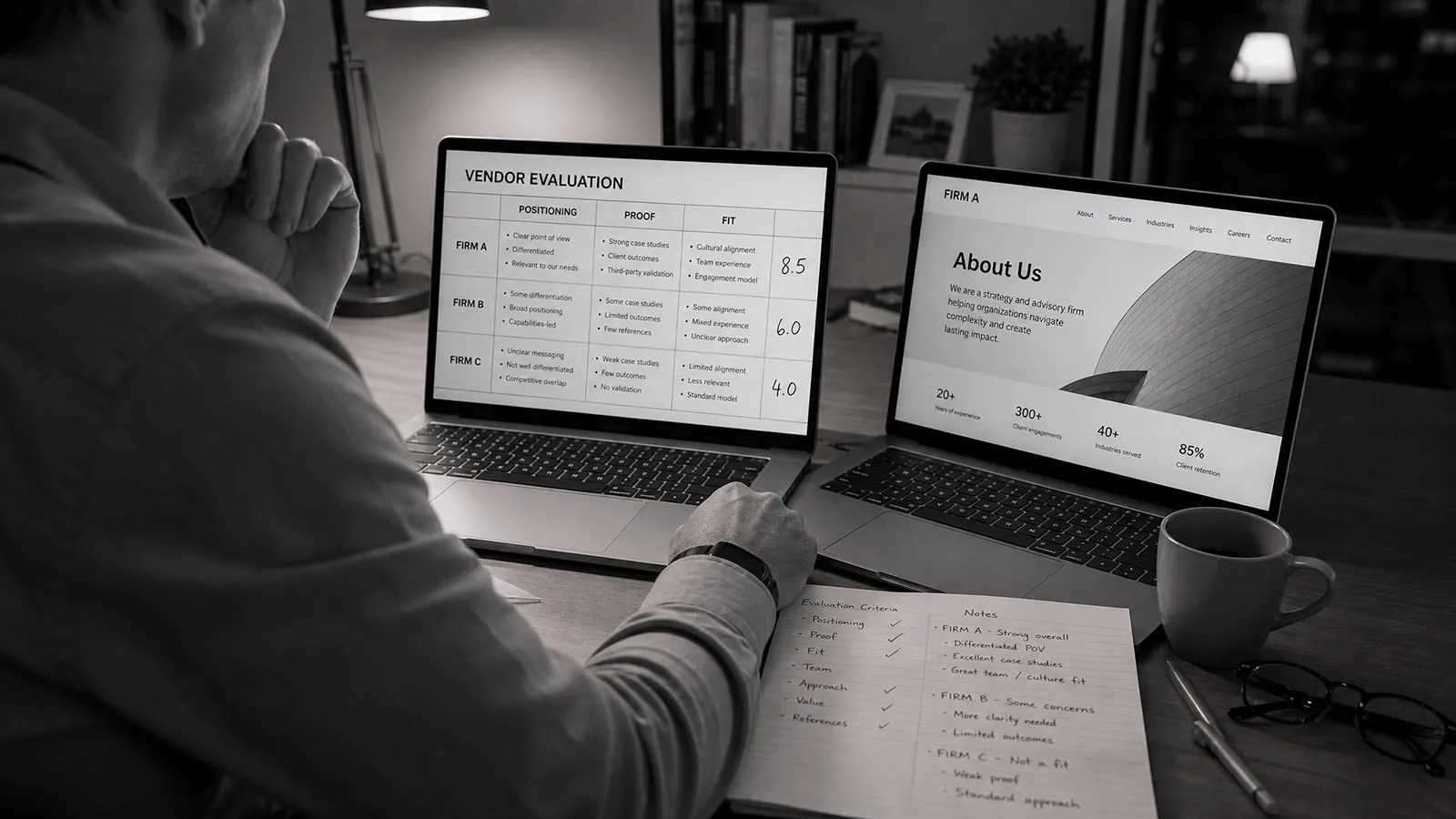
After reviewing dozens of professional services websites across Houston's legal, financial, and consulting sectors, the same gaps appear repeatedly:
- Generic positioning. "We provide exceptional service and tailored solutions" describes every firm in the city. A prospect reading that line has learned nothing about why you are different from the three other firms they are also evaluating.
- No proof at the right level. Case studies and credentials exist, but they are not structured around the buyer's specific context — the size of their firm, the nature of their problem, the outcome they are trying to achieve.
- LinkedIn presence that doesn't match the website. A polished new site and a LinkedIn profile last updated two years ago sends a signal: this firm invested in appearances, not in staying current.
- No clear next step. The prospect is ready to engage. The website gives them three options, none of which feel low-friction enough to act on at 9pm on a Tuesday.
What the Decision Actually Hinges On

The firms that consistently win the invisible evaluation share one characteristic: their digital presence answers the question the buyer is actually asking. The buyer is not asking "what services do you offer?" They are asking "have you solved my specific problem before, for a firm at my level, and can I trust you to do it again?"
That distinction — between listing capabilities and demonstrating relevant experience — is the gap between a website that generates inquiries and one that generates silence. The design is rarely the problem. The framing almost always is.
What to Audit This Week
The Three-Minute Audit
Open an incognito browser. Search your firm name and the primary service you offer alongside "Houston." Read what you find the way a prospect would — someone who doesn't know you, evaluating three options at once. Ask honestly: does what they find match the firm you have actually built?
That gap — between the firm you are and the firm that shows up online — is where the deals you never knew you lost are happening.
Closing it is not a matter of spending more on advertising. It is a matter of locking a clear position and building the digital presence that communicates it with the same precision you bring to your client work. When those two things are aligned, the invisible evaluation starts going your way.