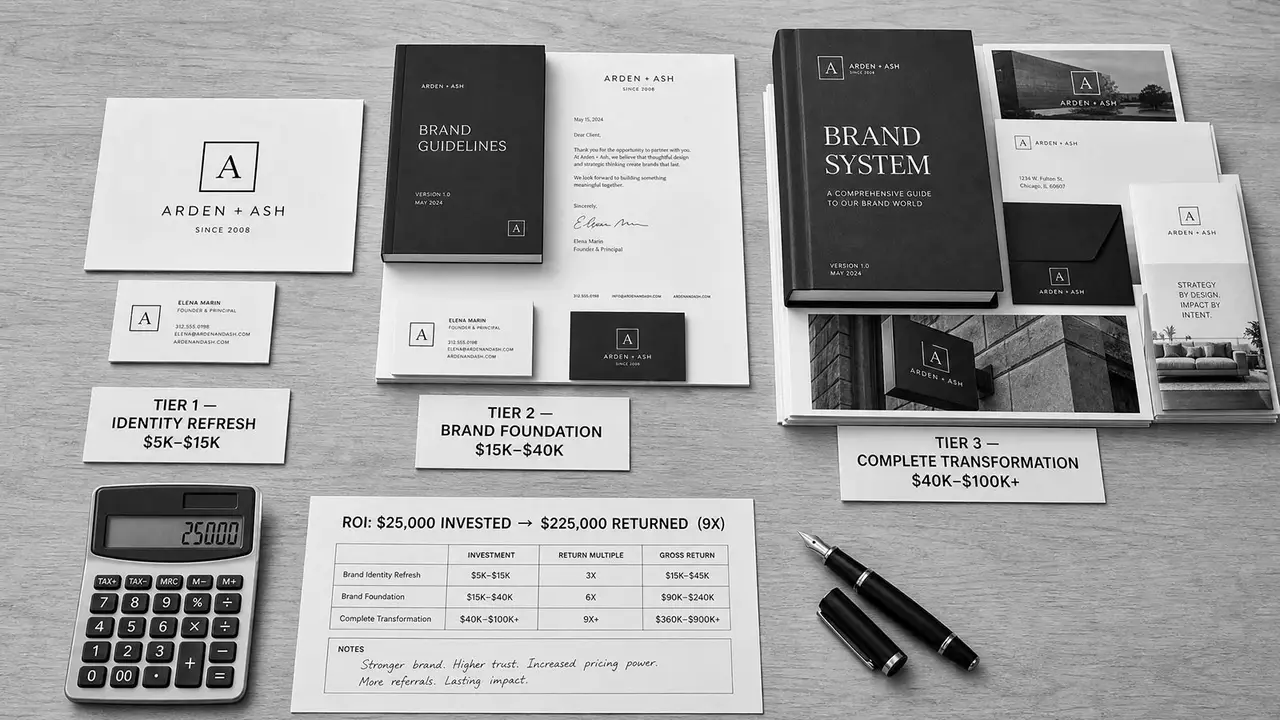
The difference between a strategic partner and an execution vendor is not obvious from a portfolio — but it is critical to your outcome.
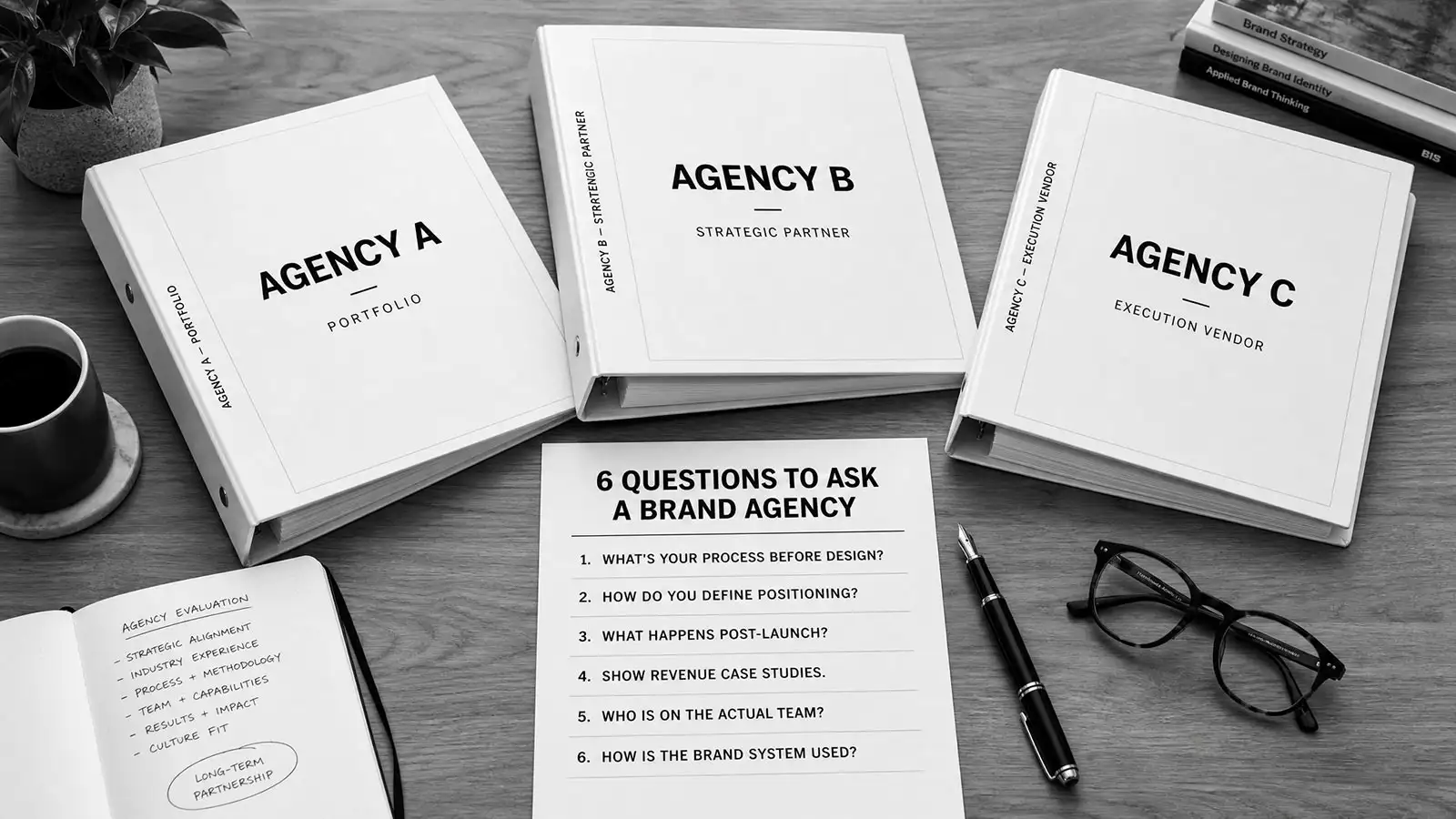
If you are searching for a brand agency in Houston, you are likely evaluating three to five options, looking at portfolios, and trying to figure out why the price ranges vary so dramatically. One agency quotes $8,000. Another quotes $65,000. They both say they do "brand strategy and design."
The difference is not always obvious from a portfolio. But it is critical to your outcome — and there are specific questions that reveal it fast.
The Core Distinction: Strategic Partner vs. Execution Vendor
Most brand agencies in Houston are execution vendors. They are excellent at delivering what you ask for: a logo, a website, a brand guide. The problem is that founders often do not know exactly what to ask for, because the strategic clarity that defines what needs to be built is part of the work they need help with.
A strategic brand partner starts with the business problem — your positioning, your competitive context, the specific growth stage you are in — and uses that to define the work. The output is not a deliverable list. It is a system built to solve a specific problem at your specific scale.
Ask any agency you are evaluating: "Before you show me work, tell me about a client problem you solved." If the answer describes deliverables, they are a vendor. If the answer describes a business outcome, they might be a partner.

Six Questions to Ask Every Agency You Interview
"What is your process before any design work begins?"
A strategic agency has a documented discovery and positioning phase. An execution vendor starts with a questionnaire and moves to concepts within a week.
"How do you define positioning, and how do you arrive at it?"
Positioning is not a tagline. An agency that confuses the two will give you language that sounds good and does nothing.
"What happens after the brand launches?"
If the answer is nothing — if there is no digital marketing activation plan — you are buying a car with no fuel.
"Can you show me a case study where the brand work directly affected revenue or growth?"
Portfolios show aesthetics. Case studies show outcomes.
"Who will actually be doing the work?"
Many agencies sell senior relationships and deliver junior execution. Know exactly who is on your account from day one.
"What does your brand system include — and what does my team do with it after you leave?"
A brand guide that no one uses is not an asset.

Red Flags to Watch For
- They lead every conversation with their portfolio rather than your problem.
- They cannot articulate a proprietary framework or methodology — they just "do great work."
- The proposal is a deliverable list with no strategic rationale for why those specific deliverables solve your specific problem.
- There is no mention of measurement, outcomes, or what success looks like 12 months after launch.
What the Houston Market Specifically Requires
Houston's professional services market runs on relationships and reputation — which means your brand needs to perform in contexts most national agencies underestimate: chamber events, referral networks, LinkedIn, and the ten-second evaluation that happens when someone Googles your firm name after getting a referral from a mutual contact.
The right Houston brand agency understands that dynamic and builds for it — not just for how the brand looks, but for how it performs in the specific market you are operating in. Most deals are won or lost before the first conversation. The agency you choose should understand why — and build accordingly.
The One-Question Shortcut
After any agency conversation, ask yourself: did they spend more time talking about their work, or about your business problem? The ratio tells you everything about how they will approach the engagement.