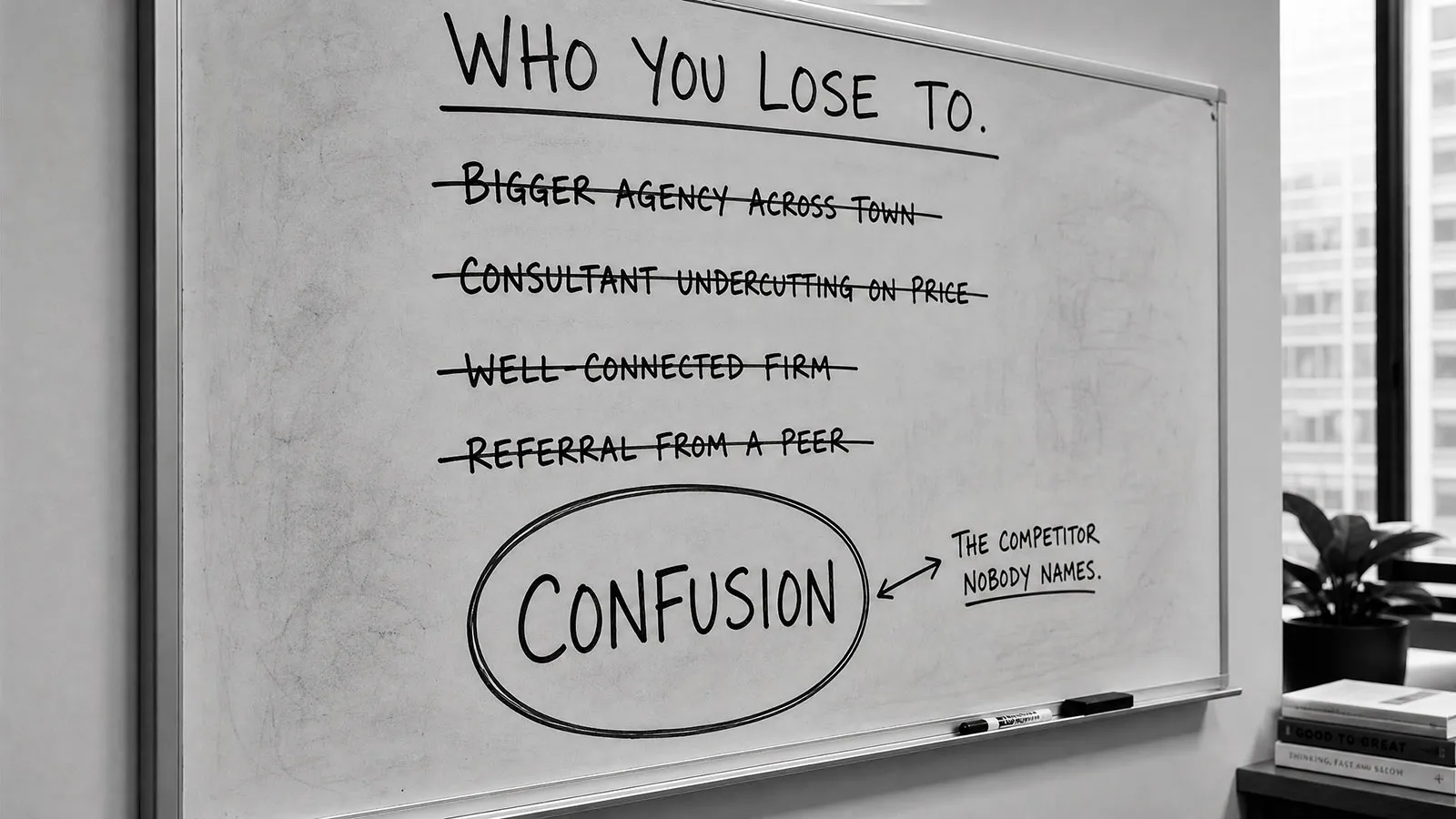
Why Houston Professional Services Firms Are Invisible on Google — and What to Do About It

There is a particular frustration that many Houston professional services founders arrive at around year three or four of their firm. They have a blog. They have been publishing. Someone told them content was the key to organic growth. They have sixteen articles on their site and zero meaningful search traffic, despite two years of consistent effort.
They hire an SEO consultant who tells them they need more content, faster. So they produce more content, faster. The traffic numbers move slightly. The qualified leads do not appear. And the whole exercise starts to feel like an elaborate way to occupy time without producing results.
The problem is almost never effort. It is strategy — specifically, the absence of a positioning-led content strategy. Without one, content proliferates without authority, targets the wrong queries, and attracts visitors who will never become clients.
The Content Volume Illusion
Google's algorithm has become substantially better at distinguishing between content that exists to fill space and content that demonstrates genuine expertise on a specific topic. It rewards depth and topical authority — and topical authority requires focusing, not spreading.
A professional services firm in Houston that publishes broadly — a post on tax strategy here, a post on HR policy there, a post on business valuation because a client mentioned it — is not building topical authority. It is signaling to Google that the firm does not have a clear area of expertise. The algorithm responds accordingly: some minor ranking on many tangential queries, strong ranking on almost nothing.
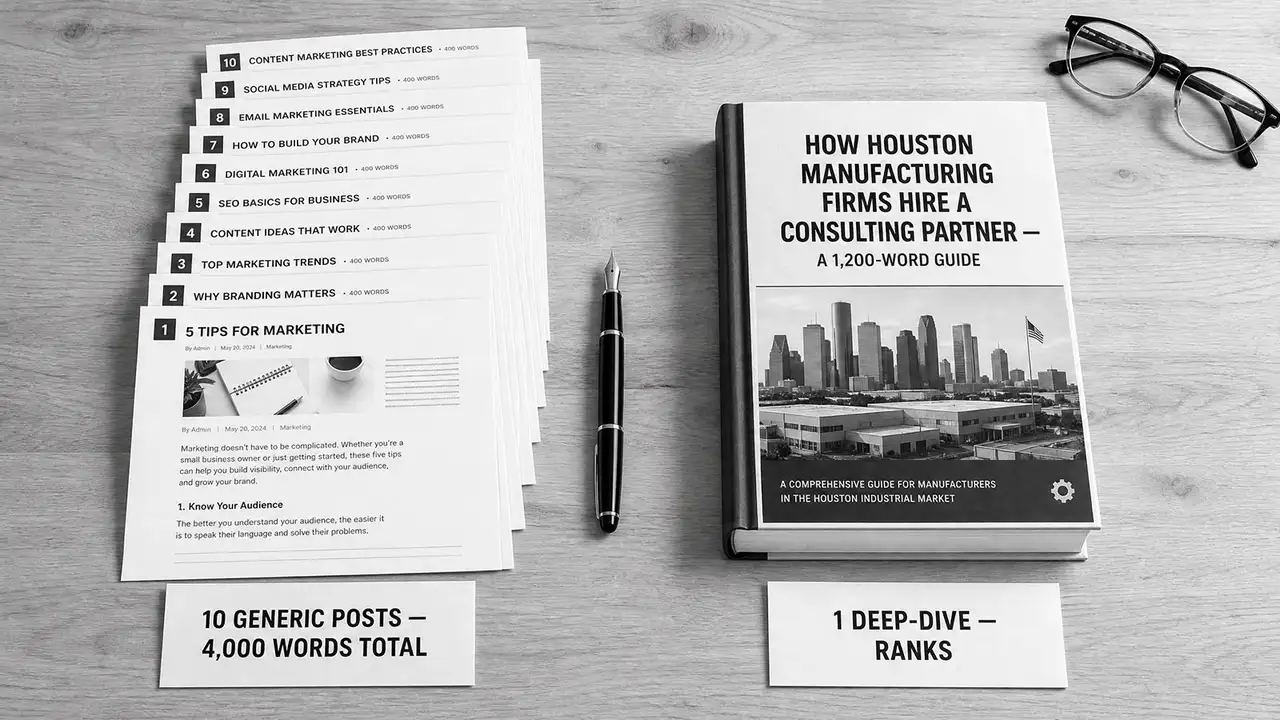
Contrast that with a firm that publishes exclusively on a specific problem set for a specific client type — say, succession planning for Houston-area family businesses between $5M and $50M in revenue. That firm, publishing twelve deeply researched articles on that specific topic, will outrank a competitor with sixty generic articles almost every time. Depth beats breadth. Specificity beats volume.
"You cannot rank for everything. Firms that try to rank for everything rank for nothing. Google rewards depth, specificity, and authority — not breadth."

What Google Actually Rewards in Professional Services
For professional services, the search queries that matter most are not general industry terms. They are problem-specific, situation-specific, and often location-specific. A prospect who types "HR consultant Houston" is early in their search. A prospect who types "how to handle employee misclassification dispute Houston" is deep in a specific problem and far more likely to convert.
The content that captures that second type of search is detailed, credible, and written by someone who genuinely understands the problem — not a generic overview recycled from industry association materials. It demonstrates expertise. It answers the specific question completely. It references the local context. And it earns trust before the prospect has spoken to a single person at the firm.
That kind of content takes longer to produce. But ten articles of that quality, targeted at the specific problems your ideal clients are actively searching for, will outperform a hundred generic posts by enough of a margin to make the comparison embarrassing. The math on this is not close.
The Positioning-SEO Connection Most Firms Miss
This is where SEO and positioning connect in a way that most agencies never explain. A firm without clear positioning has no basis for a content strategy. If you do not know precisely who you serve and what specific problems you solve for them, you cannot identify the specific search queries those clients use when they are looking for help. And without that, every content decision becomes a guess.
A firm with tight positioning, on the other hand, can build a content map in a single session. The target client is clear. Their problems are known. The language they use to describe those problems is knowable through client conversations and search research. The content strategy writes itself — not because it is easy, but because the strategic foundation makes the decisions obvious.
If your firm has been producing content without results, the fix is almost certainly upstream from the content itself. The positioning needs to be clarified first. The target client needs to be made specific. The content strategy needs to flow from that foundation — not from a list of industry topics that seem vaguely relevant to the firm's general area.
Fix the strategy. The content becomes easier to produce, more targeted, and far more likely to rank for the queries that actually bring clients in the door.